
How it works
From pupil practice to your next teaching step.
Follow the learning cycle from an activity through pupils’ responses and teacher-led follow-up.
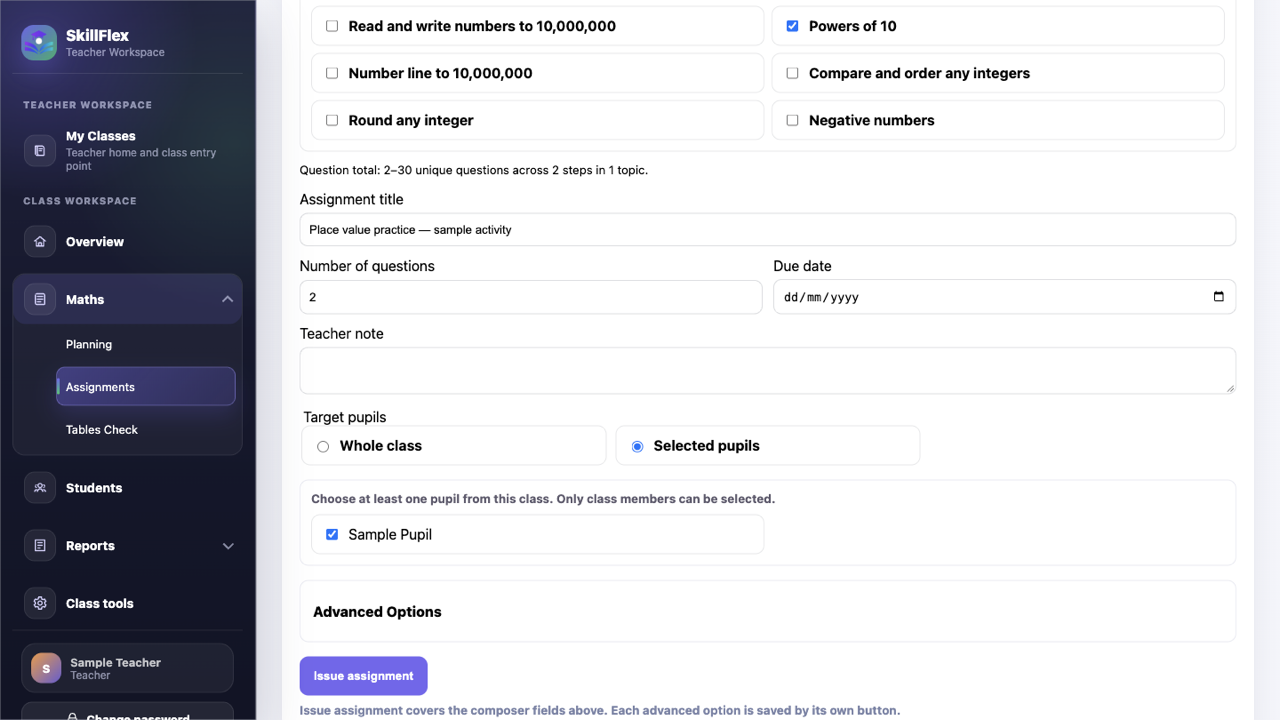
Choose the practice
The teacher selects an activity for the class, a group or selected pupils.
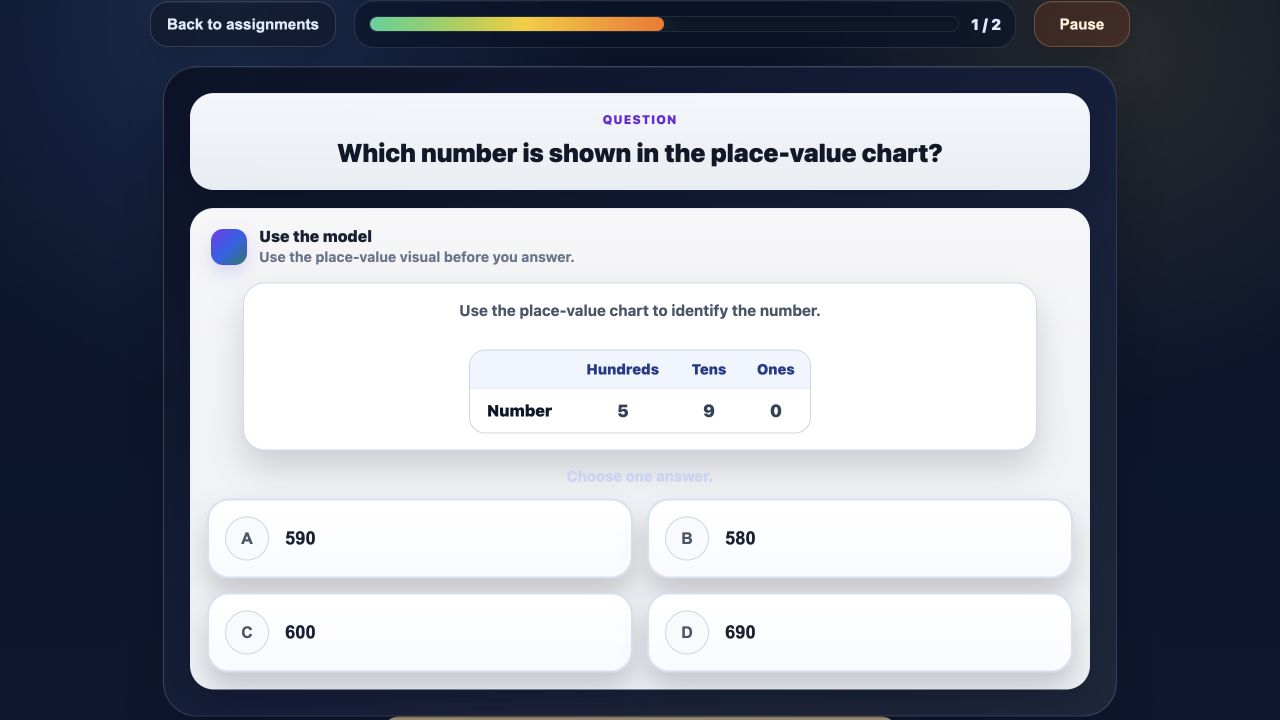
Pupils respond
Pupils work through the questions and receive feedback as they practise.
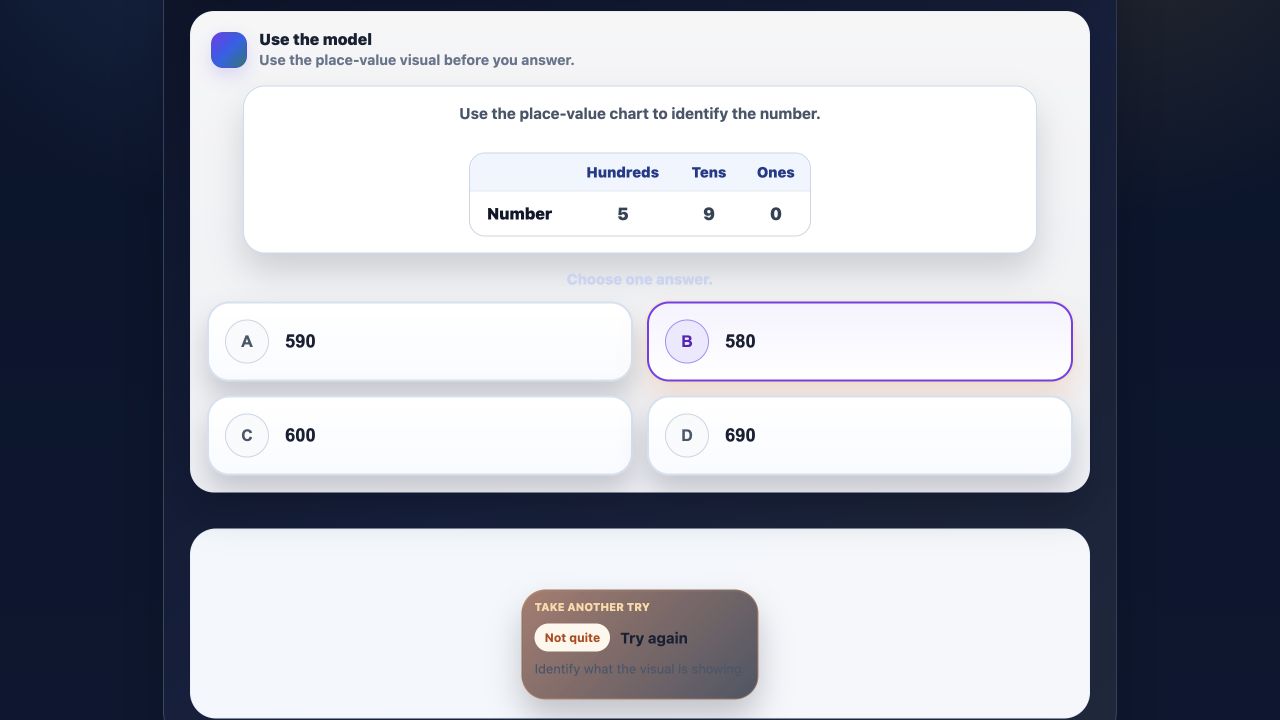
Attempts remain visible
If a pupil needs another attempt, the retry does not hide the original response.
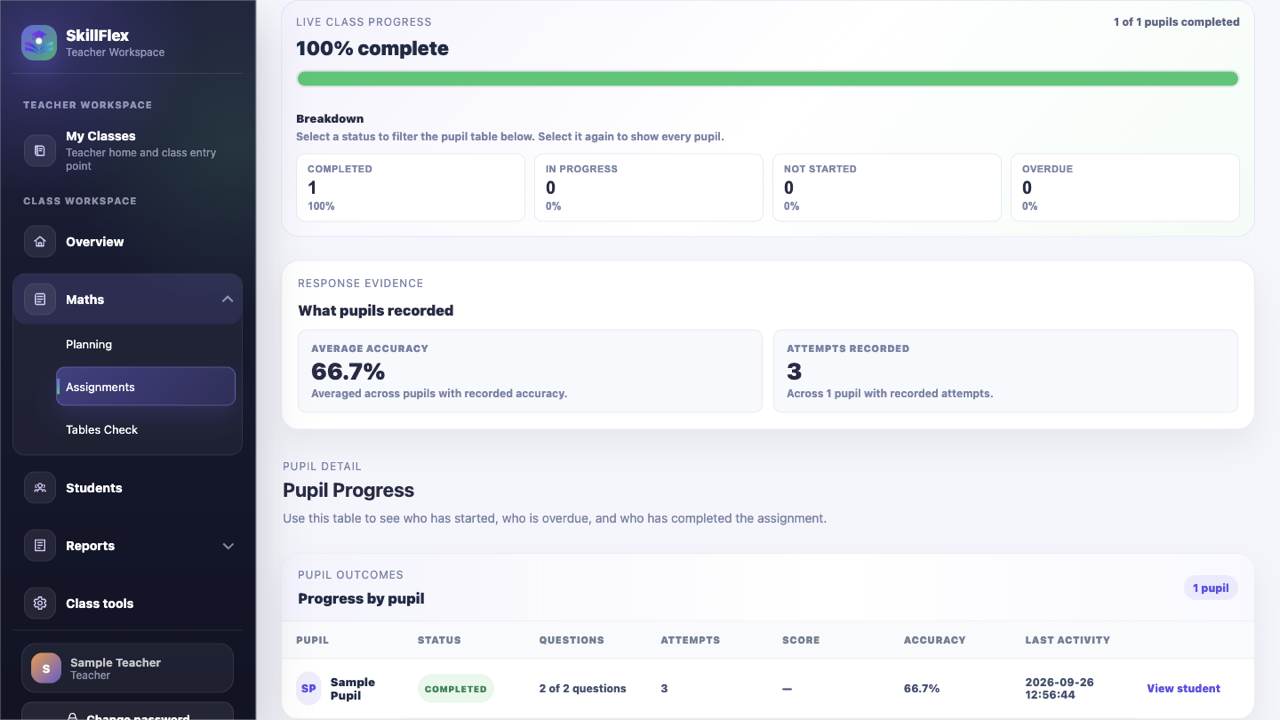
Review the evidence
Teachers can review completion, responses and attempts to see where follow-up may be useful.
The report counts every attempt, so a pupil who needed a retry stands out from those who answered correctly first time, even when everyone has completed the activity.
Provide targeted follow-up
Teachers can provide selected pupils or groups with appropriate support, core or stretch practice.
Review what happens next
Later responses provide further evidence that teachers can consider alongside classroom teaching and assessment.
See the complete learning cycle.
We’ll show how practice, responses and targeted follow-up work together.
Book a school demo